Can You Let Breath Actually Change Your Life?
When you want to be with a situation in a different way, change your breath to gain the freedom of breaking a pattern and making a new choice.


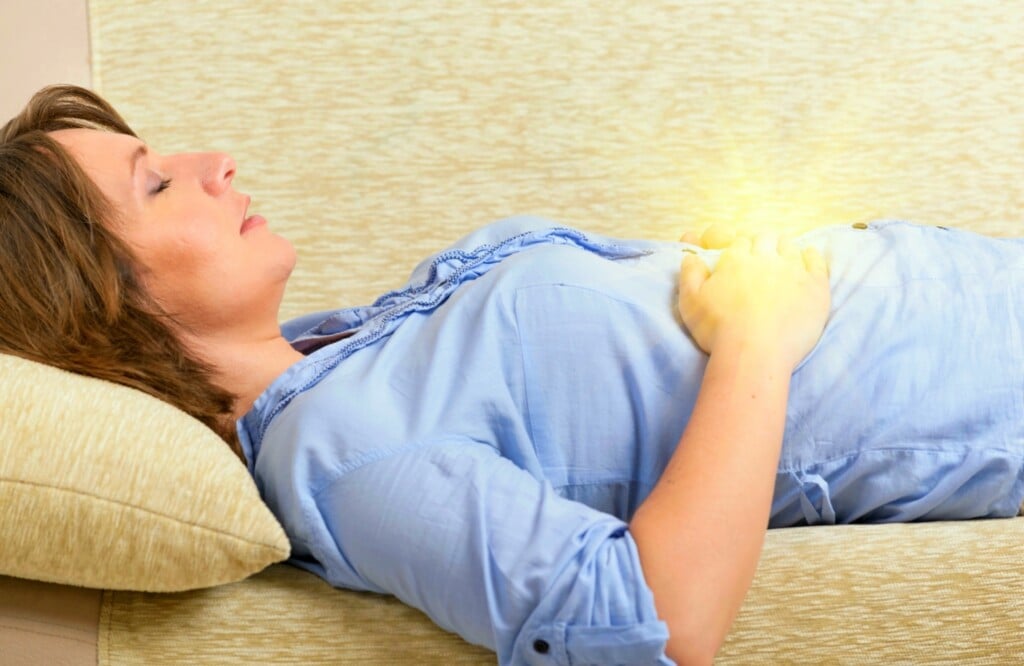
Photo©rido/123rf
Have you ever thought about the purpose of breathing — why you actually do it? Is it simply to survive? Does breath drive you or do you drive breath? Can you let breath become your crucible for change?
Breath is an instinctual miracle that takes place in your body all day long, every day of your life. It is your single greatest endowment for not simply living, but thriving. You can take your breath for granted, or you can choose to use breath to actively engage differently with your life.
Breath is simply waiting for you to be aware of it, to use it and harness its powers to shift your reactions, your thoughts, your emotional charges, and your trauma. Breath can be used to regulate hormones, shift nervous system responses, clear trauma, and stop repetitive, totally unhelpful thought cycles.
Too often, people want to face their problems with their brain — this same brain that is coming from a belief there is something wrong with you. It is the source point of your limiting beliefs.
The breath is oriented around everything being right with you. This is why it is such an amazing teacher and crucible for change. You may instinctually want to turn to what you lack as a way to create what you want. When you turn to the breath, you are orienting toward what is open, available, and present. The breath is all and more, known and unknown, friend and instigator. It is a gift waiting to be opened and explored.
Valuable Transformational Tools: Breath Work And Breath Meditation
Breath meditation is used to transform fear by feeling it in the body without getting triggered by fear as an emotion. Breath meditation can be used to remove blocks of stagnant fear inside your body so you can feel your core more clearly. When fear can be felt as an embodied sensation, you are teaching yourself how to be in positive alignment with your nervous system.
Both breath work and breath meditation are valuable tools for transformation. Breath work is used to shift your relationship to your present moment in the midst of life with all of its busyness, stress, decision making, reactions, and work. Breath work allows you to make a choice in the moment to come out of pattern and into change.
Breath meditation creates cellular memory, teaching you to engage in alternate states of being through different methods of breathing. Breath meditation teaches you how to get out of your head and into your body by creating a focal point for your mind so you can breathe and notice sensation.
Both breath meditation and breath work can be used to heal your nervous system, and to shift your ability to metabolize what’s around you. This helps you to engage in real time with what’s happening in the moment as an embodied person.
Using Breathwork In Everyday Life
- REGULATE YOUR NERVOUS SYSTEM. If you are in a situation that’s safe and your system is screaming lack of safety, you can engage in a breath work practice that regulates your nervous system. Whether you’re calming yourself down with a quiet whistle exhale or simply a very long exhale, the choice to breathe differently is breath work.
- BREAK UNWANTED PATTERNS. Have you ever noticed you have a tendency to stop breathing when afraid, or move into a shallow breath when you are stressed? You can choose to engage in breath with awareness to clue yourself in on what you’re missing or a different choice you might make when you find yourself repeating an unwanted pattern.
To develop an awareness of shadow (unwanted pattern), you can notice when your breath is missing or hard in the breath cycle to show you how to make a choice outside of the pattern. The four stages of the breath cycle are an inhale, a pause, an exhale, and a pause. By consciously extending any or all of these four stages, you will shift your thoughts, your reactions, and your emotions in any given situation. You can choose to break the pattern by breathing deeper or breathing in a more natural cycle.
- RELEASE EMOTIONAL TRAUMA. Breath work can support release when you are triggered from a past trauma or having strong emotion. Instead of getting caught up in reasons or thoughts, you can use a releasing breath to support expression of emotion without over thinking. A releasing breath can allow a feeling of release without having to act on the more negative aspects of the emotion — for example, not yelling at someone you love but rather breathing very intensely until you can think again.
If fear is being triggered, slowing the breath down through conscious inhaling, then pausing, slowly exhaling and pausing again, will slow the fear response down. The brain can then assess if fear is a necessary response in the moment, and facilitate appropriate action. A releasing breath liberates you from a past response pattern, enabling you to bring the present reality into clear focus.
- FEEL EMBODIED AND ALIVE. If you sense something inside you is dead and disembodied, and you want to feel more alive, you can choose to breathe an intense breath to bring you into your body so you can engage more with your life. An intense breath is one in which you pant, move your diaphragm, and allow your stomach to actively engage in the fullness of the cycle of the breath. In yoga, the Lion’s Breath exhale allows your jaw to drop, your tongue to come out, and a noise to escape your throat. Done repetitively, this intense breath changes your brain chemistry so you can feel a different sense of self.
Breath Meditation
By actively engaging in quiet time for yourself, breath meditation utilizes changing the patterns of breath as a conscious choice to repattern your relationship to breath itself. Breath meditations can include anything from simply experimenting with closing a nasal passage and breathing to fully manipulating the breath in stages and steps. You can try pausing and exaggerating the stages of the breath and become aware of your body’s responses, or explore mouth breathing with a different mouth shape to see how that feels. Breath meditations can exaggerate blocks to create emotional release, and shift brain chemistry to agitate or calm. Even just three minutes of consciously manipulating and observing your breath creates a shift in awareness of self in your body.
When you create a sacred space for yourself to breathe outside of your default breath, you build awareness and tolerance for states of being, strong emotions, and body sensations. A breath meditation practice focuses the mind so you can stop thinking so much, enabling you to feel without doing. Like all meditation, an effective breath meditation lets go of demand and creates the ability to curiously explore what unfolds as you change your breathing patterns.
Nessa Emrys is a kundalini yoga teacher, retreat facilitator, writer, energy healer, and therapist. Her passion is to bring people into transformative experiences so they can live the life they are meant to have. You can find more of her writing as well as breath video tutorials at mindfullynessa.com/@nessaemrys.
Find holistic Breathwork Resources in the Spirit of Change online Alternative Health Directory.
RELATED ARTICLES:
Breath Of Calm: Seated Qigong And Yoga Practices To Find Peace In Challenging Times
Your Rhythm Of Breathing Controls Emotional Judgement And Fear