Guide To Natural Medicine Pain Relief with Healing Touch
We’ve come a long way, as an increasing number of doctors willingly collaborate with bodyworkers, energy healers, and medical intuitives.
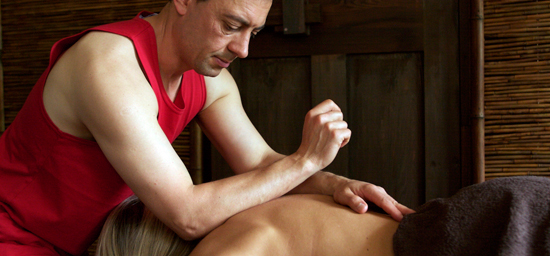


It’s human nature to use touch to alleviate pain and suffering. If you’re a parent, you know this first hand. We use touch to calm a frightened child, to reassure her that everything is all right, that she isn’t alone. For thousands of years, healers have used touch and massage as an integral part of their practice.
In many countries, including Germany, Japan and China, massage therapy never fell out of favor even with the advent of modern medicine. Not so in the United States. By the 1950s massage was virtually unheard of here, at least in the context of healing and medicine. Things started to shift in the 1960s and 1970s. People began to reject the established way of doing things in favor of a more personalized, back-to-nature approach. These were exciting times. We learned about the healing power of herbs, the importance of whole foods, and most exciting of all, the mind/body/spirit connection. We looked to other cultures for inspiration, ideas, and healing techniques. We wanted to take responsibility for our own health, to challenge the disease model of medicine.
We’ve come a long way, especially in the last decade. Practices that were once labeled “alternative” at best are now “complementary,” and an increasing number of doctors willingly collaborate with bodyworkers, energy healers, and medical intuitives. The growth and maturity of the holistic health community is a good thing, but it can be confusing. The field of bodywork is no exception. This guide describes bodywork modalities in which the practitioner massages, kneads, stretches, or applies pressure to the body.
Massage Therapy
Massage therapy, as we have come to know it, was originally brought to the United States in the 1850s by two New York doctors who studied in Sweden. The first clinics were opened in Boston and Washington after the Civil War. Swedish massage itself was developed by Per Henrik Ling in the 1830s. It involves soft tissue manipulation using basic strokes and techniques: effleurage (long strokes usually toward the heart), petrissage (lifting, rolling, kneading strokes), friction (circular strokes), vibration, and tapotement (tapping). These techniques are incorporated into the various types of massage therapies available today, most of which were developed since the 1960s. These include:
- Deep tissue massage — Pressure is deeper and more intense than Swedish massage to release chronic patterns of muscle tension.
- Sports massage — Designed to enhance performance and aid in recuperation from injury.
- Neuromuscular massage — Deep massage that concentrates finger pressure on specific individual muscles designed to release trigger points or intense knots of muscle tension. It’s a good method of pain control.
- Esalen massage — The main focus is to create a state of deep relaxation rather than to relieve muscle tension or aches and pains.
Research has shown that massage increases circulation, reduces heart rate, lowers blood pressure, and stimulates inactive muscles aiding recovery from injury or inactivity. It also increases the production of endorphins, the body’s “feel good,” pain-relieving chemicals. Ongoing studies on the effectiveness of massage involve cancer and AIDS patients; premature, HIV and drug-exposed infants; people suffering from migraines and depression; patients recovering from surgery; and autistic children. So far results are invariably positive.
According to the American Massage Therapy Association (AMTA), the number of adults who have had a massage in the past twelve months has more than doubled in the past five years, along with the number of therapists. Many businesses now offer weekly on-site massages as a company perk resulting in decreased employee turn-over, increased alertness, and improved performance.
What To Expect: Most people turn to massage for pain reduction or to relieve stress and anxiety. The practitioner will need to know where it hurts, where it’s tight, and what you expect from treatment. Massage is done without clothes (underpants may be optional) on a massage table. The body is covered with a light blanket or sheet and only the parts being worked on are exposed at any one time. Oil or lotion is used to facilitate stroking and kneading techniques. A typical session lasts one hour and the whole body is treated but longer or shorter sessions or treatments that focus on a particular area, such as the back or neck and head, can be arranged.
Structural Integration
In the 1940s and 1950s, Dr. Ida P. Rolf began her pioneering work of creating a system of soft tissue manipulation designed to “organize the body in gravity” called Structural Integration. Everyone referred to it as Rolfing™, which is now a trademarked name. Dr. Rolf began teaching at Esalen in the 1960s, and in 1972 she formed the Rolf Institute of Structural Integration in Boulder, Colorado, which teaches and continues to develop her work. The basic premise is that aging, injuries, emotional stress and poor posture all contribute to imbalances in the body, which we experience as lack of energy and flexibility, headaches, and body aches and pains. Rolfing seeks to bring the body back into balance and realigned with gravity by restoring elasticity to the myofascia or connective tissue of the body. Other forms of structural integration are basically takeoffs on Dr. Rolf’s work.
Our myofascia are like sheets of plastic wrap. Every joint, muscle, bone, and organ in the body is surrounded by it. In some places it’s as thin as a nylon stocking; in others it’s quite thick. At the ends of muscles it comes together and becomes tendon which attaches muscle to the bone. The fascia shapes the body and gives it strength. Ideally the fascia is elastic but chronic strain or injury can greatly reduce it’s elasticity. Over time it can become as hard as a piece of aluminum. This limits where your muscles and bones can be, restricts range of motion, and inhibits circulation and sensation.Rolfing consists of patterns of pressure designed to restore elasticity to the myofascia and balance the myofascial relationships in the body.
Rolfing is popular with athletes, dancers, and others who want to improve their performance or heal from stresses or injuries. Some people choose Rolfing as a way of releasing old emotions held in the body so they can move on in their lives. Of all the forms of body work, Rolfing is perhaps the least understood. Many shy away from it because they believe it is painful. Certainly there may be moments that are intense or stretch the limits of comfort, but skillful Rolfers develop an excellent intuition about such things and adjust their touch to accommodate your needs. The Rolf Institute, which has continued and expanded Ida Rolf’s work since her death, has developed a broad range of techniques that produce results with minimal discomfort. Variations have been developed, making it possible to tailor treatments to each client’s needs.
What To Expect: Rolfing consists of a series of ten sessions, each approximately an hour and a half long, scheduled between one and three weeks apart. At the initial session, the practitioner evaluates posture and movement patterns and asks about aches and pains or injuries. This evaluation is done in your underwear. “Before” pictures may be taken. (The “after” pictures taken at the last session are often quite remarkable!) The practitioner uses hands, fingers, knuckles, the elbow and even the whole lower arm to loosen and lengthen the fascia surrounding muscles and joints. Each session has specific goals and builds on the last to gradually align the body and achieve long- lasting results. And after all the sessions are completed, you may even be taller!
Is it necessary to take all ten sessions? Not always. Even one session can be of benefit and sometimes a specific problem can be corrected after just two or three sessions. It’s up to the individual.
A variation of Rolfing, Hellerwork is a form of Structural Integration founded in 1979 by former Rolfer, Joseph Heller. It combines deep tissue work with movement education to teach the correct use of the body in daily activities. It also includes verbal dialogue to help the client become aware of the relationship between emotions, attitudes, and the body. Hellerwork consists of eleven 90-minute sessions.
Shiatsu & Oriental Bodywork
Shiatsu is an ancient form of Japanese body work that dates back to the tenth century when Japanese monks traveled to China to study Buddhism. They observed the practice of traditional Chinese medicine (TCM) and brought it back with them to Japan, where it was integrated with the traditional massage-type healing that predominated at that time.
TCM is based on an understanding of qi (ki in Japan), the essential life force, and the role it plays in health. Qi is the creative energy of the universe, inseparable from life itself. According to TCM, illness, disease and pain are caused by an imbalance or blockage of qi. When qi is strong and flowing freely we feel great; when qi is weak or blocked, we don’t.
Qi flows into our bodies from the earth (yin energy) and the from the heavens (yang energy), moving along energy pathways called meridians, which roughly follow the paths of nerves, blood vessels, and lymphatic vessels. Located along the meridians are over 300 pressure points where qi is most active, and where blockages can be felt most clearly. Acupuncturists insert needles or burn Chinese herbs at these points to release blocked qi.
Shiatsu, which means “finger pressure” in Japanese, uses finger and thumb pressure instead of needles to stimulate the flow of qi along the meridians and bring the body back into balance. Practitioners also incorporate pressing, sweeping motions, gentle shaking, rotating, lifting, and rolling to release blocked energy and revitalize qi. Shiatsu is an effective healing catalyst for a wide variety of difficulties ranging from emotional problems to physical ailments of every kind to stress-related disorders.
What To Expect: Shiatsu is done fully clothed, but one should avoid wearing bulky items. Because shiatsu works on the energetic system, it’s not necessary to have direct contact with the skin. The session will take a little over an hour. Some practitioners work on a thick mat on the floor, others prefer to use a table. In addition to describing current health concerns, expect to answer some questions about your general health and lifestyle. A diagnosis is made by observing your posture, walk, skin color, and the quality of your voice. The quality of your energy will also be diagnosed by palpating the abdomen (the hara) and by feeling the energy flowing through the meridians — known as taking your pulses — noting blockages and areas of fullness or emptiness.
Breathing deeply throughout the session helps move qi, brings oxygen into the body, clears the head, and is relaxing. Places of tension — you know where they are — hold excess qi, which is dispersed using techniques such as stretching, pressing, lifting, and rotating. Weak areas are strengthened by stimulating and holding techniques that encourage the flow of energy. Sometimes an area may need to be held patiently for a few minutes until the energy begins to fill the emptiness. The treatment is not painful although some areas will feel intense. Emotions may surface. As the qi is dispersed, the intensity will vanish and a release will be felt.
Other forms of Oriental bodywork include Jin Shin Jyutsu, which involves gently holding two different points at a time on the body like jumper cables, to harmonize energy flows. This can easily be done as a self-healing method or with practitioner assistance. Jin Shin Do incorporates breathing techniques, verbal dialog and Japanese finger pressure, with points held as long as one to three minutes. Neither of these methods involve massage and both are done fully clothed.
Bodywork Benefits
Many practitioners have trained in a variety of techniques although they may not be certified in all of them. An increasing number also incorporate other modalities such as Reiki, therapeutic touch, reflexology, and aromatherapy into their work. When deciding which type of bodywork is best for you consider carefully what you hope to get out of the sessions and trust your intuition.
Bodywork has physical as well as emotional and spiritual effects. Circulation of blood and lymphatic fluid is increased, the toxic by-products of chronic tension are released, range of motion is improved, and stress is reduced. As tight muscles are relaxed and blocked energy is released, old emotions can come to the surface to be released along with the tension. Research has documented that sufferers of acute and chronic pain, arthritis, epilepsy, anxiety and stress, depression, insomnia, muscle spasms, scoliosis, cerebral palsy, and workplace disorders like carpal tunnel all benefit from some form of bodywork.
Studies confirm what practitioners and their clients already knew: that bodywork plays an important role in preventative health care as well as in the treatment of injuries and disease. One session feels great, but sometimes even one or a few can bring about a complete cure. At the very least, you’ll feel more comfortable in your own skin, experience fewer aches and pains, and your energy will be more balanced and sustained. This can’t help but have a positive effect on your confidence and outlook on life.
Susan Meeker-Lowry is a frequent contributor to Spirit of Change. An herb, fragrance and resin lover, she is the owner of Gaia’s Garden Herbals, a home-based business offering handcrafted, small-batch herbal skin care products, creams, salves, serums, and natural perfumes. Visit her shop at www.etsy.com/shop/GaiasGardenHerbals.