Have You Met The Library Angel?
By embracing the possibility of the library angel, we open ourselves to a world of serendipity and inspiration, where the answers we seek may already be waiting for us to discover them.
A twelve-year-old today has a different life. The library card has been replaced by a piece of glass that knows them better than their grandmother does, that follows them to bed and wakes up before they do, and that has been engineered, with the same techniques I learned decades ago in advertising and broadcasting, to keep their eyes on it for as many hours as possible.
In these remote Indigenous communities, non-interference wasn’t a passive thing, a reluctance to get involved, the way we sometimes use the word. It was a deeply held, actively practiced value grounded in a fundamental respect for every person’s right to walk their own path and make their own choices.
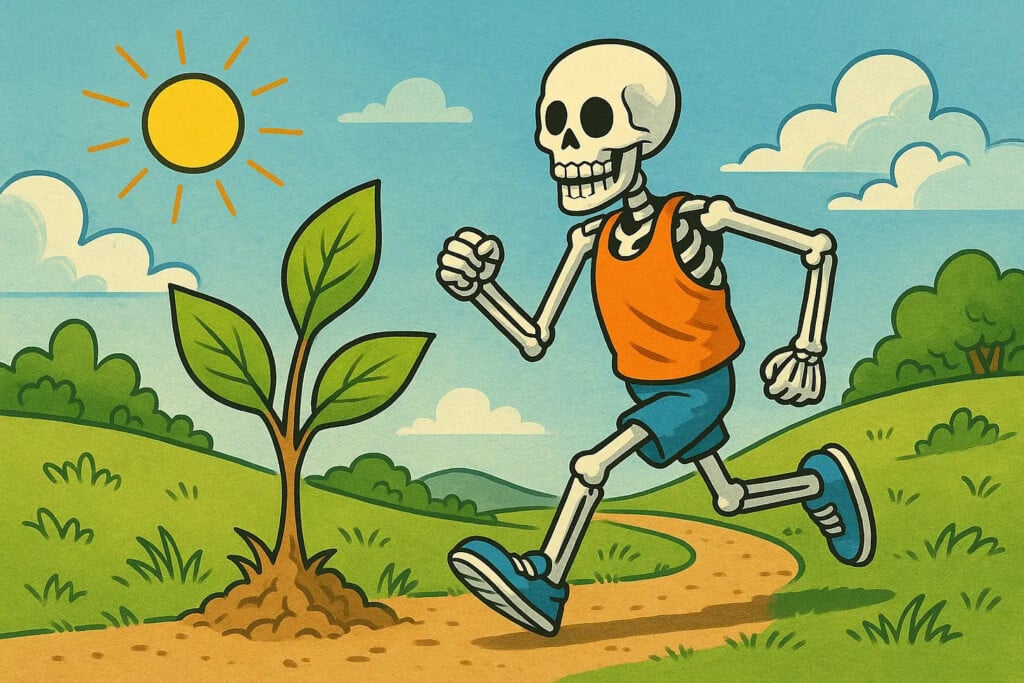
When we stop moving, bones interpret it as a signal that they’re no longer needed and begin to fade away. When we challenge them, they thicken, harden, and renew themselves. Even in old age, this feedback loop can be reawakened.
The research consistently points toward exactly what every tribal culture already knew: that meaning and belonging are not separate things, that you can’t have one without the other, and that neither of them can be delivered through a screen or legislated into existence.
Quiet courage can look like hesitation. It can look like doubt. It can even look like weakness. But sometimes it’s the difference between walking away from a room full of “chaos” and discovering a room full of brilliance.
Long before the mind assembles an explanation, the body registers strain, misalignment, and truth. A tightening in the chest, a heaviness in the gut, a fatigue that doesn’t lift with rest. These signals arrive quietly, without argument, without justification.
Information arrives fast, loud, and fragmented. It’s designed to grab attention, provoke reaction, and then make room for the next thing. Wisdom, on the other hand, moves slowly. It requires context, memory, and a willingness to hold competing truths in the mind.
We’re trained to distrust enough, to see it as settling, complacency, or as the enemy of ambition. But for most of human history, enough wasn’t a failure state: it was a goal. Enough meant survival with dignity, security without hoarding.
Old-souled people tend to value different things: depth over reach, meaning over metrics, and continuity over disruption. They’re less interested in what’s new than in what endures. Less concerned with being seen than with seeing clearly.
Learning to sit with discomfort isn’t about becoming stoic or detached. It’s about becoming honest. Honest with the body, the heart, and about what is being asked of us in that particular moment of our lives.
If you’re someone who wakes in the night and worries that something is wrong, consider the possibility that nothing is wrong at all. It may be that your body remembers something ancient.
Your body is not your enemy in midlife or older age. It’s trying to tell you something. It wants longer evenings without food. It wants a break from constant digestion. It wants the chance to clean up yesterday’s cellular mess before today’s begins. When you give it that space, everything becomes easier.
Once we pass around 60, the systems in the brain and body that govern thirst lose their previous sensitivity. The hypothalamic osmoreceptors that once reacted quickly to rising sodium levels or falling fluid volume just don’t sound the alarm the way they used to.
These tools don’t replace honesty, vulnerability, or emotional maturity. But they help create the internal space where those qualities can emerge. They unstick the patterns that keep couples spinning in circles.
Across spiritual traditions, mythologies, and even modern psychology, there is a recurring truth: it is through our wounds that we awaken. The pain we carry — when held consciously — becomes the very seed of our transformation.
One intriguing implication is that our personal bioelectric field might be shaped by the world around us. Environmental factors such as diet, stress, and exposure to toxins are already known to influence epigenetics — the way genes are expressed.
All the traumas we experience in life leave their wounds. If humankind hadn’t had ways of healing from those emotional and psychological blows, over time society would have become progressively less functional. Instead, history shows us that people usually recover even from the most severe psychological wounds.
As humans have become more and more successful at ridding themselves of parasites — particularly intestinal worms — we have developed a whole host of conditions associated with inflammation, particularly of the bowel. Could the parasitic worms humans coexisted and evolved with over millennia resolve some of our modern day epidemics?