Why You Can’t Eat Just One: It’s The Processing — Not The Ingredients
The four mechanisms of the chip trap explain why even the healthiest homemade treats can hijack your brain.


Photo©TatsuyaYamazaki/123rf
I spend a great deal of my time researching the science of nutrition and metabolism, but some of the most powerful lessons come from personal experience in the kitchen. Recently, I set out to make the healthiest possible chip — a rice and sweet potato cracker, baked in coconut oil with nothing but salt added. We spent hours perfecting the recipe: rolling the dough thin enough, adjusting bake times, getting the salt level right.
They were thin, crispy, and genuinely delicious. The ingredients could not have been cleaner. Organic rice flour, sweet potato, coconut oil, and salt. No seed oils — the linoleic acid content came in at roughly 1%. No MSG, no flavor enhancers, no artificial anything. Baked, not fried. By any conventional measure, these were about as healthy as a snack can get.
And yet, I could eat the entire batch in one sitting without blinking. They were addictive in the truest sense of the word — the same compulsive hand-to-mouth behavior you see with Doritos or Lay’s. This troubled me, because I had the same experience with dehydrated zucchini chips — a pure vegetable, sliced thin and dried. Even with nothing added, they were irresistibly easy to overconsume.
Meanwhile, if you put a whole baked sweet potato or a bowl of watermelon in front of me, I eat a reasonable amount and stop. The satiety signals work. My body tells me when it’s had enough. But with the chips? That signal never comes — or it comes far too late. This personal observation sent me down a research rabbit hole. What I found has fundamentally changed how I think about processed food — and may change how you stock your kitchen. The implications go far beyond just chips.
Over 500 Additional Calories Per Day Eating Ultraprocessed Food
Most conversations about processed food focus on what’s been added — sugar, salt, seed oils, artificial flavors, preservatives. And those are legitimate concerns. But my chip experiment reveals something more fundamental: the physical transformation of whole food into a processed format is itself sufficient to create compulsive overconsumption, even when the ingredients are impeccable.
A landmark study in 2019 at the National Institutes of Health (NIH) conducted a trial crystallizing these results. For the study, published in Cell Metabolism, researchers admitted 20 adults to the NIH Clinical Center and randomized them to receive either ultraprocessed or unprocessed diets for two weeks, immediately followed by the alternate diet. Here’s the key detail — the meals were matched for presented calories, energy density, macronutrients, sugar, sodium, and fiber.1
When a chip shatters between your teeth, the crunch travels through your jawbone directly to your inner ear — a miniature sonic event your brain finds deeply satisfying.
The results were striking. Participants consumed about 508 additional calories per day on the ultraprocessed diet, gained weight during that period, and lost weight during the unprocessed diet period. The foods were nutritionally equivalent on paper; what differed was the physical form and degree of processing.
While this study compared entire dietary patterns rather than individual food textures, it established the principle that processing level — independent of nutrient content — drives overconsumption. Later research pinpointed texture as a key mechanism.
Why Your Brain Can’t Say No To The Crunch
When a chip shatters between your teeth, the crunch travels through your jawbone directly to your inner ear — a miniature sonic event your brain finds deeply satisfying. There’s essentially nothing in nature that provides this specific type of dry, brittle, explosive fracture. Natural crunchy foods — raw carrots, celery, apples — have a wet, fibrous crunch that requires significant jaw force. The dry chip crunch is a fundamentally different sensory event.
Your brain evolved to find these textures highly rewarding. In ancestral environments, dry, calorie-dense, shelf-stable foods were rare and enormously valuable. Such foods required days of sun-drying, hand-grinding, and preparation. The sensory system that makes you seek out that crunch was an adaptive advantage. Now that same system is being exploited by a food format that can be produced in unlimited quantities.
Food Texture Controls How Much You Eat
It turns out my kitchen experiment mirrors what researchers found when they tested this formally. In a 2022 crossover study published in the American Journal of Clinical Nutrition, 50 healthy-weight participants were given four different lunch meals — varying in both texture and processing level — and allowed to eat as much as they wanted:2
◦ Soft minimally processed
◦ Hard minimally processed
◦ Soft ultraprocessed
◦ Hard ultraprocessed
The harder-textured meals were consumed more slowly. They also produced roughly a 21% to 26% reduction in both food weight and energy consumed. The least energy came from the hard minimally processed meal (about 483 kcal), and the most from the soft ultraprocessed meal (about 789 kcal) — a difference of approximately 300 calories from a single meal. Softer textures and higher processing levels likely made the food easier and faster to eat.
This finding has been replicated consistently. A 2024 study in the British Journal of Nutrition tested 24 different meals and found that slower-textured meals consistently reduced food intake by about 22%, with a 20% decrease in eating rate producing approximately an 11% decrease in energy consumed.3 The effect held across both meal types tested — breakfast and lunch — and across a wide variety of foods.
Foods designed for rapid eating quietly increase total calorie intake. Research published in Nature Food examined 2,733 individual meals across four dietary patterns and found that energy density, eating rate, and hyper-palatability consistently predicted higher energy intake across all diets.4 The faster a food could be consumed, the more calories people ate.
The 4 Mechanisms of the Chip Trap
When you dehydrate and process a whole food into a thin, crispy chip — even from the healthiest ingredients — you simultaneously trigger four mechanisms that bypass satiety. These mechanisms don’t just add up — they multiply each other. Each one makes the others worse, which is why the chip format is so disproportionately effective at overriding your body’s built-in controls:
1. First, you concentrate calories by removing water. A whole sweet potato is roughly 77% water. When you eat it, your stomach fills with volume, stretch receptors fire, and satiety hormones are released. A chip made from that same sweet potato has had most of that water removed.
You consume the caloric equivalent of several sweet potatoes in a fraction of the stomach volume. The stretch receptors embedded in your stomach wall — one of your body’s primary “I’ve had enough” signals — barely register the intake.
2. Second, you eliminate chewing resistance. A whole sweet potato requires sustained chewing — multiple chew cycles per bite, mixing with saliva, conscious swallowing. This slow oral processing gives your satiety signaling time to keep pace with intake.
A thin chip dissolves in three to five chews. The oral transit time is so short that your brain’s satiety cascade — the chain of hormonal signals that builds fullness in stages, from your gut to your brain — can’t keep up with your hand-to-mouth pace.
3. Third, you create rapid oral dissolution. Food scientists have documented what’s called the “vanishing caloric density” phenomenon. When a food dissolves or fractures rapidly in the mouth, the brain partially discounts the calories. The sensory system interprets rapid oral clearance as lower energy density than the food actually contains. The chips are calorie-dense but sensorially “light.”
In other words, your brain uses oral texture as a rough calorie meter — when food melts away quickly, your brain reads it as low-energy, like broth or lettuce, even when it’s calorically dense. It’s essentially a sensory accounting error.
4. Fourth, you create a rapid reward cycle. Each crunch generates a small dopaminergic reward signal — a small burst of dopamine, the same neurotransmitter involved in the pleasure response to sugar or social media notifications.
The chip is gone in seconds, the reward fades, and your hand reaches for the next one. The cycle time from reward to seeking to reward is perhaps five to 10 seconds per chip. Compare that to eating watermelon, where each bite involves cutting, picking up, biting through rind, and chewing through fibrous flesh.
The Dehydration Experiment Confirms It
My experience with zucchini chips was equally instructive. Zucchini is about as benign a vegetable as exists — low-calorie, high water content, minimal sugar. But sliced thin and dehydrated, it becomes compulsively overeatable. Fortunately, zucchini isn’t particularly calorie-dense even when dehydrated, so the health consequences are modest. But the behavioral pattern is identical to the rice-sweet potato chips.
This confirms that the addiction mechanism is the physical format, not the macronutrient composition. You don’t need sugar, fat, salt, or any combination thereof to create compulsive eating behavior. You need only remove water, remove structural integrity, and create rapid oral dissolution.
The Uncomfortable Truth About ‘Healthy’ Snacks
I now believe that there is no such thing as a healthy chip. It doesn’t matter if you buy them at Whole Foods, Sprouts, or make them in your own home from the healthiest ingredients.
The physical transformation of whole food into a processed format is itself sufficient to create compulsive overconsumption, even when the ingredients are impeccable.
The chip format itself — thin, dry, calorie-dense relative to volume, rapidly dissolving — is metabolically adversarial regardless of ingredient quality. Calling something a “healthy chip” is a contradiction in terms, much like “healthy cigarette.” You can improve the ingredients, but the delivery mechanism is inherently problematic.
Engineered food combinations dominate the modern U.S. food supply. Hyper-palatable foods — foods engineered with specific combinations of fat, sugar, salt, and carbohydrates that excessively activate brain reward systems — are pervasive in the U.S. food system.5
My experience goes further than even the hyper-palatability research suggests. My chips had none of the engineered combinations that define hyper-palatable food. They were addictive purely through their physical form.
Food texture and structure shape how much people consume. Researchers writing in Current Nutrition Reports have made the broader case that food form, texture, and matrix — not just composition — are primary determinants of energy intake and metabolic response.6 Their review demonstrates that the way a food is physically structured matters as much or more than what it contains.
What This Means for Your Kitchen
The practical takeaway is straightforward but difficult to accept: if you’re trying to optimize your health, avoid the chip and cracker format entirely, even when made from whole, organic, minimally processed ingredients at home. The effort and energy required to make them at home is itself a clue.
In nature, the processing energy required to turn a sweet potato into a dehydrated cracker would have been enormous — days of sun-drying and hand-grinding. That energy barrier was a natural throttle on consumption that modern kitchens have eliminated. Before eating any snack, ask yourself: does this require real chewing, or does it dissolve? If it dissolves, your satiety system is essentially flying blind. Instead:
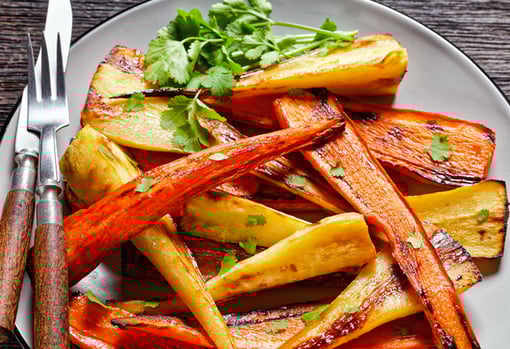
- Eat your sweet potatoes whole; try baked sweet potato wedges with the skin on — the moisture and fiber remain intact
- Eat your zucchini steamed or raw
- Eat your rice as cooked rice
- If you crave crunch, cucumber slices with the skin on provide mechanical resistance without the calorie concentration
Keep the water in, keep the fiber intact, keep the structural complexity that forces your jaw to work and your satiety system to function as designed. The path to health runs through whole foods in their natural, water-containing, structurally complex form — not through finding ever-more-clever ways to turn them into chips.
This article was brought to you by Dr. Mercola, a New York Times bestselling author. For more helpful articles, please visit Mercola.com.
Sources and References
1, Cell Metabolism. 2019;30(1):67-77
2, The American Journal of Clinical Nutrition 2022;116(1):244-254
3 British Journal of Nutrition 2024;132(4):1-12
4 Nature Food 2023;4(2):144-147
5 Appetite. 2021;167:105592
6 Current Nutrition Reports 2022;11(2):124-132
Find holistic Energy Healing And Medicine in the Spirit of Change online Alternative Health Directory.
RELATED ARTICLES:
Here’s How To Identify And Cut Back On Ultraprocessed Foods
Life After Gluten And The Sneaky Sabotages